


We often tell clients, “Be sure to amplify any secured coverage via social media channels.” Clients nod and smile with no additional questions. Then coverage is secured (because of course 1903 PR always comes through) and it rarely even sees a re-post on the client’s LinkedIn profile. Turns out, not everyone knows what it means to amplify coverage so we wanted to share real-world examples of amplification through LinkedIn.
We have an example from Meza Studios. Full transparency, they are not clients but they did take our headshots. Netafim USA is a client but we were not involved in this project. We saw this out in the wild of LinkedIn because we follow Meza Studios.
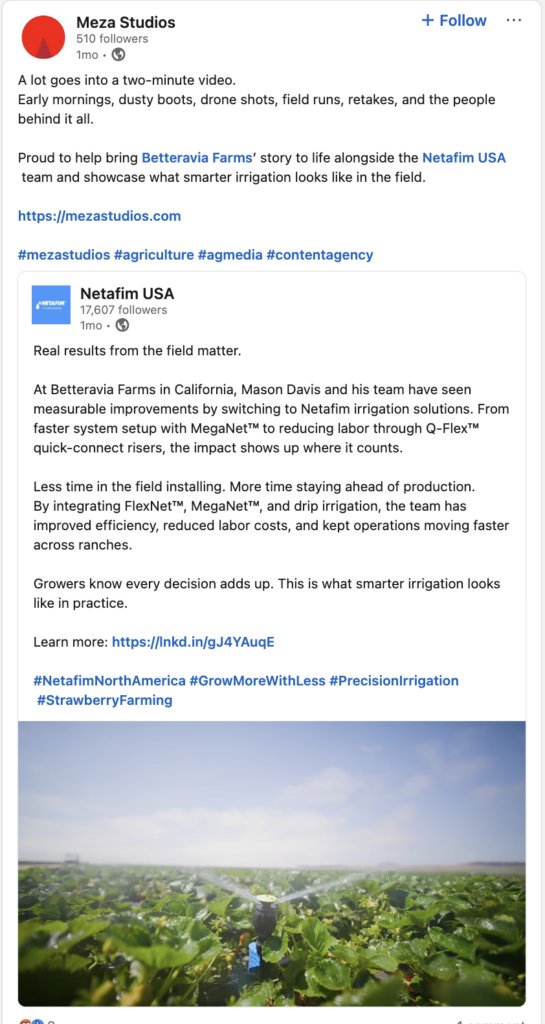
Meza published a social post from their own profile that does a great job of naturally highlighting what they brought to a project and showcasing their work in a not-too-self-promotional manner.
The original post from Netafim does not mention Meza’s involvement in the video. Meza AMPLIFIED the original post by resharing it and adding a brief description that spells out:
- How they were involved in the project
- What their team brought to the video
It is brief, informative, and connects Meza to the work they produced for a client in a way that has a natural flow to the conversation. When we ask clients to amplify coverage, what we’re hoping to see is that they take an editorial piece that a journalist has produced, repost it, and add some commentary that links them to the article. It’s a chance to weave in any messaging you wish had been clearly stated in the piece.
If the story is about one of our client’s customers, the commentary is the place to explicitly state that it was your product that helped them achieve the results discussed in the article. If it’s a non-promotional, vendor-neutral thought-leadership piece – the comments are the place to state how your service can address the issues raised.
Often pieces of earned media are posted on social media by the original source without a mention of the companies interviewed of the solutions that made the difference. Sharing this content from your own social media profiles is a great first step, but to take it all the way to “amplification,” add a bit more information to connect the dots for potential customers reading the post.
Make it clear that you contributed to the story and how your solutions played a role in addressing the issues brought up. Even if the original story doesn’t get around to discussing solutions, social media is the place to close the loop and state that you could help with this problem.
Just like any other piece of marketing collateral, the goal is to extract as much value as possible across every available channel. From social media to direct emails, how are you extending the use of any source?
Don’t let good coverage slide by without proper amplification. Repost and add a line or two about how your company fits into the story. It will help spread the coverage that your PR team is securing and it will make it crystal clear to readers how you can solve their problems. Social Media amplification is also a great way to keep your social channels active and reinforce your credibility by highlighting third-party validation.