
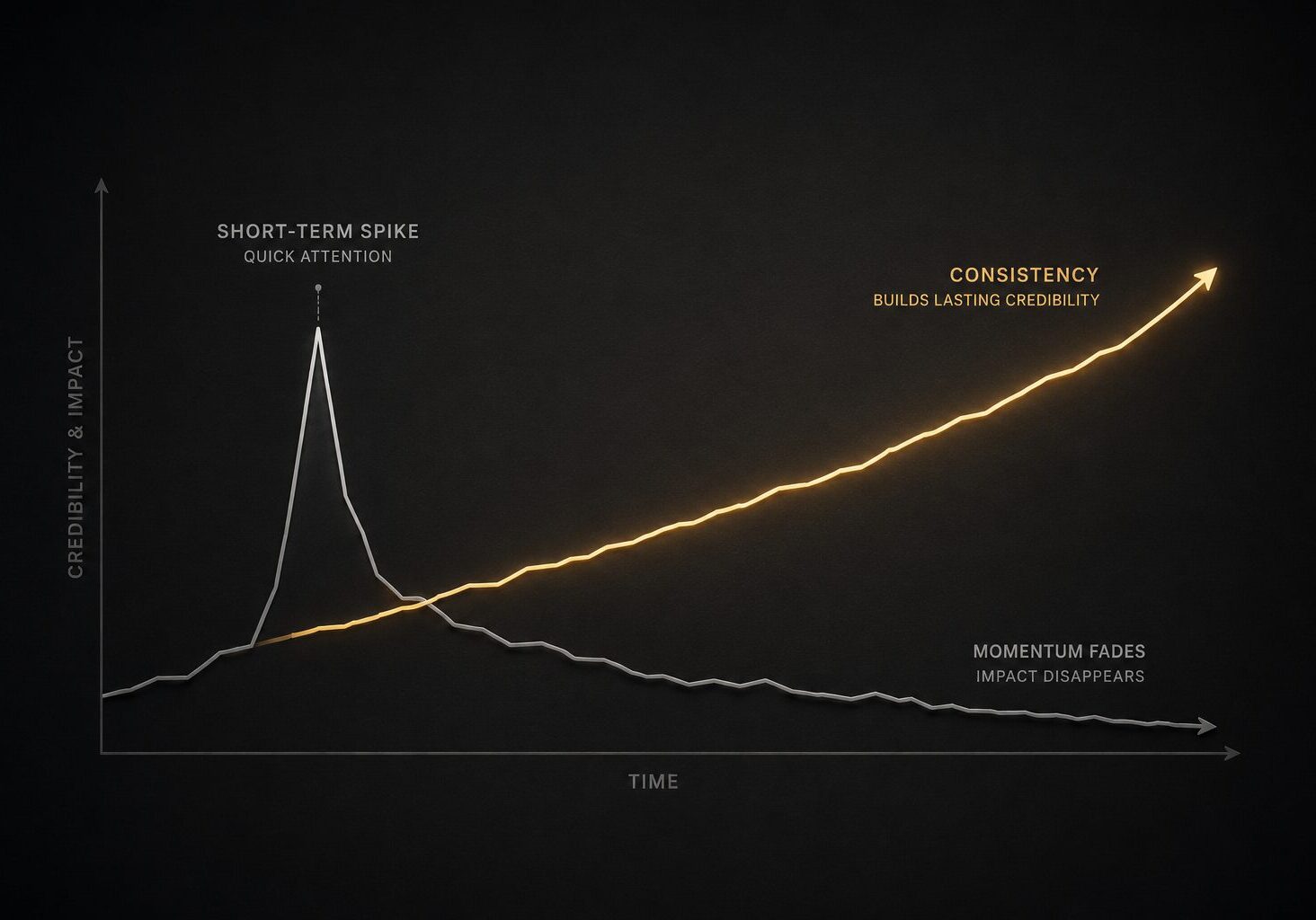

Momentum feels powerful. A headline lands, attention spikes, and internal excitement builds quickly. But in newsroom reality, momentum is temporary while consistency compounds. Journalists remember companies that show up clearly and coherently over time, not those that flare briefly and disappear. Sustainable credibility is built through repetition of positioning, disciplined sequencing, and long-term relevance. These seven dynamics explain why steady narrative consistency outperforms sporadic bursts of visibility.
1. Repetition Builds Familiarity
Journalists cover beats continuously, and familiarity reduces friction. When a company’s positioning appears consistently across quarters, it becomes easier to understand and reference. Repetition signals discipline rather than opportunism. Momentum without repetition fades from memory quickly.
2. Consistency Strengthens Trust
Trust forms through predictability. When executives communicate the same core narrative under different circumstances, journalists gain confidence in its stability. Sudden pivots or exaggerated shifts raise skepticism. Stability reinforces authority.
3. Compounding Visibility Shapes Category Identity
Appearing repeatedly within a defined context establishes category ownership. Journalists begin to associate a company with specific themes or market developments. That association becomes shorthand in future coverage. Momentum spikes rarely achieve that effect.
4. Narrative Discipline Reduces Risk
Rapid visibility often introduces messaging inconsistencies. Consistent strategy allows teams to refine and reinforce positioning over time. Journalists notice when language evolves thoughtfully rather than reactively. Discipline protects credibility.
5. Long-Term Relevance Attracts Deeper Coverage
Sustained visibility invites more substantial reporting. Journalists are more likely to pursue deeper interviews when a company demonstrates ongoing relevance. Momentum moments may attract short mentions but not lasting engagement. Consistency earns depth.
6. Internal Alignment Improves Over Time
A consistent external narrative reinforces internal clarity. Teams become more fluent in articulating positioning. Journalists encounter fewer contradictions across interviews. Alignment compounds alongside visibility.
7. Buyers Interpret Consistency as Stability
In regulated and enterprise markets, stability signals lower risk. Journalists understand this dynamic and reflect it in framing. A steady narrative trajectory reassures external stakeholders. Momentum without durability appears fragile.
Momentum generates excitement, but consistency generates credibility. The companies that build durable authority treat media strategy as infrastructure rather than bursts of activity. Over time, repetition and discipline shape perception far more powerfully than isolated wins.