
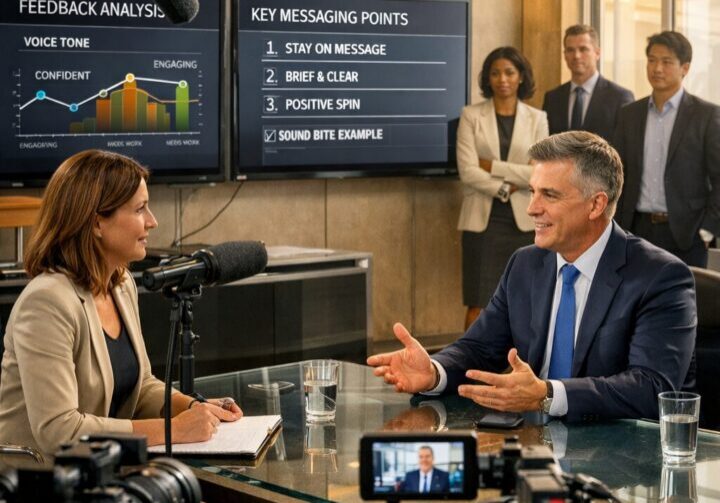

Media interviews used to reward polish, charisma, and comfort in front of an audience. In 2026, they reward something else entirely: clarity, precision, speed, and the ability to navigate an environment shaped by skepticism, shrinking newsrooms, AI-driven misinformation, and reporters under more pressure than ever.
Executives who once felt confident in interviews are discovering that the old rules no longer apply. And leaders entering the spotlight for the first time quickly learn that natural communication skills and leadership presence are not enough to succeed in modern media landscape.
The media has changed. Expectations have changed. The stakes have changed. Which means the skill set must change too. This is why media training has shifted from “nice to have” to executive essential, even for seasoned spokespeople.
The Media Landscape Your Executives Trained for No Longer Exist
Ten years ago, interviews were slower, more conversational, and often forgiving. Today’s interviews are faster, more pointed, and shaped by constraints most brands don’t see:
- Reporters manage multiple beats
- Interviews are shorter
- Questions are sharper
- Context is thinner
- Quotes must be stronger to make it into stories
Executives must now deliver value immediately. The margin for rambling, wandering, or over-explaining is gone. Media training equips leaders with the ability to deliver crisp, quotable, relevant answers that earn trust and survive editing.
AI Has Raised the Stakes for Clarity
AI has accelerated misinformation and reporters are more skeptical as a result. Executives are expected to provide commentary that:
- Cannot be mistaken for generic AI-generated language
- Includes specificity, relevance, and originality
- Is backed by expertise, not marketing phrasing
What once passed as “solid commentary” now gets dismissed as noise. Media training teaches leaders how to communicate with a level of precision that stands out in an AI-saturated ecosystem.
Experienced Executives Are Often the Most at Risk
A surprising trend inside high-growth and enterprise companies: the executives most resistant to media training are usually the ones who need it most.
Why? Because they rely on confidence and confidence can mask blind spots.
Common issues among seasoned spokespeople:
- Over-explaining
- Speaking in jargon
- Giving answers too long for modern interviews
- Missing the soundbite
- Underestimating difficult questions
- Defaulting to internal language instead of audience language
- Forgetting that interviews are not conversations—they’re content creation
Media training helps leaders update outdated habits and adopt techniques built for the modern newsroom.
Interviews Now Have Higher Consequences
An untrained executive can unintentionally:
- Offer inaccurate or unclear statements
- Reveal information that shouldn’t be public
- Speak off-message
- Create reputational or legal risk
- Confuse customers or investors
- Miss an opportunity to shape the narrative
Media training protects executives, protects the brand, and protects the story.
Strong Media Performance Is Now a Leadership Signal
Visibility is leadership currency. In 2026, executives aren’t just expected to run companies, they’re expected to represent them publicly with authority and composure.
Media training elevates:
- Investor confidence
- Board perception
- Team morale
- Customer trust
- Industry leadership
The best leaders aren’t just operationally effective. They’re narratively effective as well.
Why This Matters for Companies Entering 2026
The companies that win share of voice, credibility, and industry authority will be the ones with leaders who communicate clearly, confidently, and strategically under pressure.
Media training isn’t about performance. It’s about readiness. And readiness is what shapes perception.