
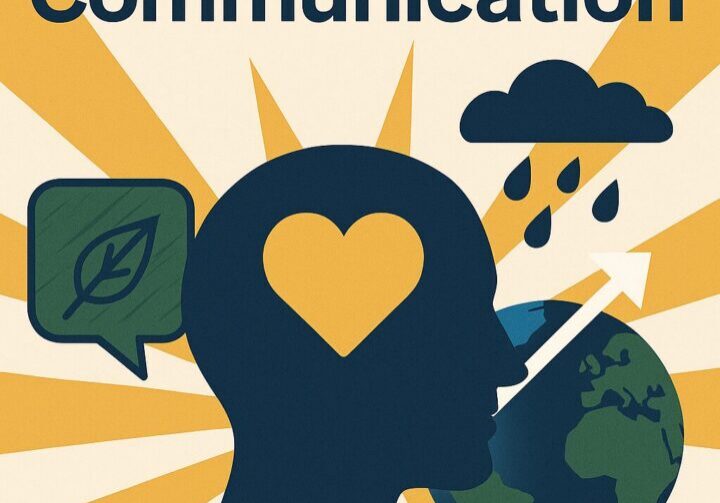

For all the billions spent on sustainability campaigns, most still fail at the one thing that matters most: connection.
We’ve optimized our data, frameworks, and reports — but in the process, we’ve lost the plot.
Consider the contrast: a corporate sustainability officer unveiling a 200-page impact report to polite applause, versus a farmer describing how drought reshaped her harvest. The first has numbers; the second has meaning. That gap — between what’s said and what’s felt — is where modern climate communication breaks down.
The Empathy Deficit in Sustainability Messaging
Sustainability leaders know the science. They can quote carbon targets and lifecycle metrics. But emotional intelligence — the ability to read, relate, and resonate — often goes missing.
Studies from Yale’s Program on Climate Change Communication show that while 70% of Americans acknowledge climate change, only 35% feel personally connected to it. The implication is clear: the issue isn’t awareness; it’s emotional distance.
This is where emotional intelligence transforms communication from informing to inspiring.
Lesson 1: Speak to Feelings, Not Just Facts
Facts inform, but feelings motivate. When messages rely solely on data — tons of CO₂ saved, gallons of water restored — they activate logic but not empathy. To change behavior or belief, stories must tap into emotion, identity, and shared values.
Instead of leading with:
“We reduced emissions by 15%.”
Try framing it as:
“We’re working toward a future where every community breathes cleaner air — and we’re 15% closer than we were last year.”
That single pivot shifts the message from statistics to stakes.
Lesson 2: Redefine the Climate Hero
Climate storytelling too often glorifies scale — global summits, billion-dollar innovations, sweeping pledges. Yet audiences relate most to proximity. Highlighting small-scale actions, local leaders, and human-level transformation fosters credibility.
As The Guardian’s climate coverage demonstrates, the most shared sustainability stories focus on relatable change: cities cooling pavement, growers regenerating soil, communities recycling greywater.
Each example grounds climate action in empathy, not abstraction.
Lesson 3: Make Communication Two-Way
Emotional intelligence also means listening. Too many climate narratives speak at people, not with them. When leaders invite feedback, acknowledge fatigue, or recognize skepticism, they turn communication into collaboration.
Lesson 4: Design for the Senses
Emotion isn’t only verbal — it’s visual, spatial, and sensory.
From color palettes and typography to imagery and tone, design communicates empathy subconsciously.
Earth tones, organic motion, and authentic photography (instead of staged perfection) create trust signals audiences can feel before they read a word.
At 1903 PR, our sustainability PR combine behavioral psychology and design strategy — ensuring that every message feels as human as it sounds.
Empathy Is the New Efficiency
Emotional intelligence doesn’t replace technical accuracy — it amplifies it. By pairing credible data with compassionate storytelling, sustainability leaders can bridge the gap between understanding and action.
Because at the end of the day, climate progress doesn’t hinge on what we prove — it hinges on what we move.