

In 2025, technology companies won’t just compete on product features — they’ll compete on the power of their stories.
Across AI, cybersecurity, manufacturing, and emerging technologies, the brands that stand out aren’t always the ones with the most advanced tools. They’re the ones that craft and consistently communicate a clear, compelling narrative — one that shapes how industries, investors, and the public understand their role in the world.
Building narrative authority isn’t about louder messaging; it’s about smarter storytelling.
Why Narrative Strategy Matters More Than Ever
1. The Media Landscape Has Shifted
In an era of algorithmic news feeds, disappearing attention spans, and proliferating niche media, control over narrative is fragmented. Journalists want clarity and data, customers want authenticity, and investors want to see mission-driven leadership. A well-structured brand narrative acts as your anchor across all these channels.
2. Authenticity Drives Trust
B2B buyers, journalists, and policy stakeholders have grown wary of jargon-heavy, generic positioning. What cuts through is genuine perspective — a clearly defined point of view tied to real-world outcomes. When brands articulate their “why” through consistent storytelling, trust follows.
3. The CEO as Chief Storyteller
Founders and executives have become critical narrative vehicles. From LinkedIn posts to industry panels, executive thought leadership is now inseparable from brand narrative. When leadership is equipped with strong messaging and media training, their words become amplification engines.
Core Pillars of a Tech Narrative Strategy
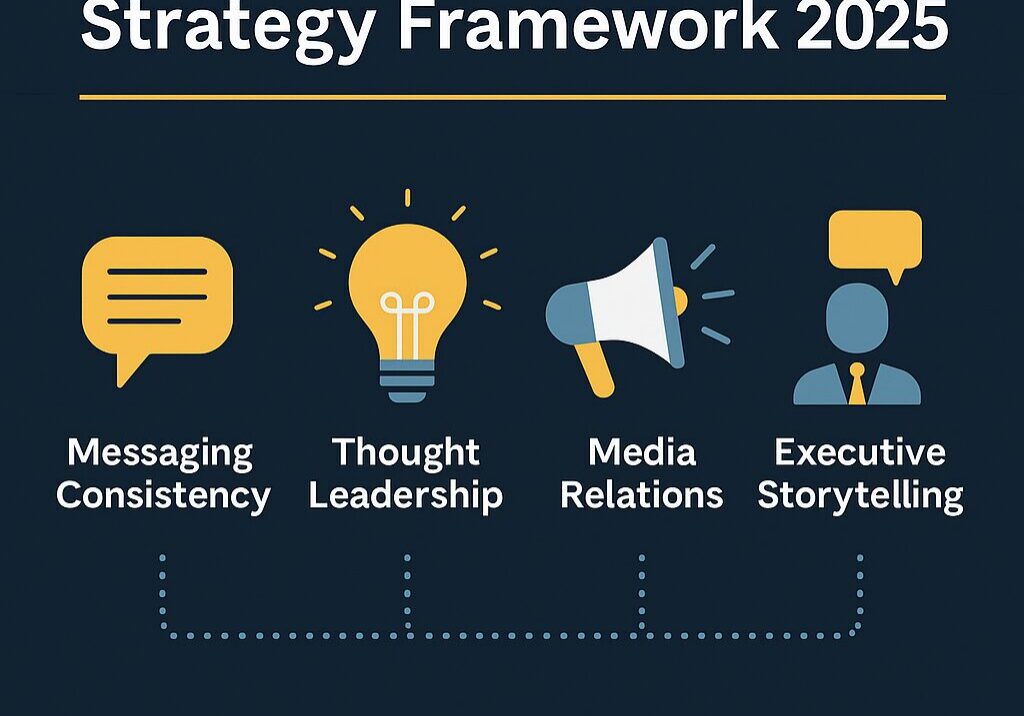
1. Messaging Consistency Across Channels
A narrative without internal alignment crumbles fast. The strongest tech brands ground every pitch deck, press release, keynote, and landing page in a single, well-defined narrative architecture.
🔸 Pro Tip: Build a 1-page narrative doc summarizing your mission, market POV, differentiators, proof points, and key storylines. Train your entire team on it.
2. Thought Leadership as Narrative Infrastructure
Thought leadership is not a vanity exercise — it’s the operational backbone of a narrative strategy. By publishing insightful perspectives, contributing to industry discussions, and earning speaking slots, brands shape the conversations their audiences care about.
Key tactics include:
- Executive bylined articles on timely industry trends
- Data-led reports that set the agenda
- Analyst and investor briefings that echo your POV
- Speaking programs targeting priority events and panels
3. Analyst & Investor Communications
For enterprise technology companies, your narrative doesn’t stop at the media. Analyst perception and investor confidence are shaped through consistent, strategically timed communications — from funding announcements to vision updates. A tight narrative builds market confidence.
4. Media Relations as a Narrative Engine
Earned media is still one of the most powerful credibility drivers. But in 2025, journalists expect data-driven insights, visual assets, and access to key leadership. Position your narrative within broader industry trends to earn coverage that reinforces — not dilutes — your core story.
5. Internal Alignment & Executive Storytelling
Your narrative must live beyond the comms team. Equip spokespeople and subject matter experts with briefing docs, media training, and key messages. When internal stakeholders can articulate the story with clarity, narrative cohesion turns into narrative velocity.
Tactical Steps to Build & Amplify Your Narrative
- Run a Narrative Audit — Assess your messaging across web, sales decks, PR, and thought leadership. Identify gaps.
- Craft Story Bundles — Develop 3–5 key “story arcs” tied to your business priorities (e.g., sustainability, innovation, trust).
- Integrate Into Launches & Campaigns — Every launch becomes a story moment, not just a feature announcement.
- Layer in Content Distribution — Amplify through owned (blog, newsletter), earned (media), and shared (social) channels.
- Activate Your Executives — Align leadership comms cadence with narrative priorities.
Measuring Narrative Success
Strong narratives are measurable. Set KPIs like:
- Share of Voice in target publications
- Media Sentiment over time
- Search Volume & Keyword Rankings related to your POV
- Speaking & Analyst Placements secured
- Inbound Leads attributed to content campaigns
Regular measurement turns narrative strategy into a repeatable growth engine.
Conclusion: Your Narrative Is a Strategic Asset
Narrative authority isn’t a “nice to have.” It’s the foundation for reputation, visibility, and market leadership. The brands that invest in narrative strategy in 2025 will shape conversations rather than react to them.