

It’s 2025 — and the world is done with buzzwords.
“Net zero,” “carbon positive,” and “circular economy” have become table stakes in corporate sustainability. The brands earning attention now aren’t the ones with the loudest claims — they’re the ones that can prove their impact and communicate it with transparency, clarity, and authenticity.
For sustainability-driven organizations, the difference between ESG talk and ESG trust comes down to one thing: communication strategy.
Why ESG Communications Still Miss the Mark
Many organizations are doing good work — but few are telling those stories well.
There are three major communication gaps most companies face:
- Data without narrative: Reporting is quantitative, but storytelling is qualitative. Stakeholders need both.
- Ambition without context: “We reduced water use by 10%” means little without explaining the baseline, methods, or scale.
- Initiatives without accountability: Announcing a target is easy; showing progress builds credibility.
In ESG, metrics matter — but meaning wins.
From Reporting to Storytelling
The most effective sustainability communications shift from compliance to connection.
Instead of viewing ESG reports as checkboxes, leading companies treat them as opportunities to shape how their brand is perceived.
Here’s how:
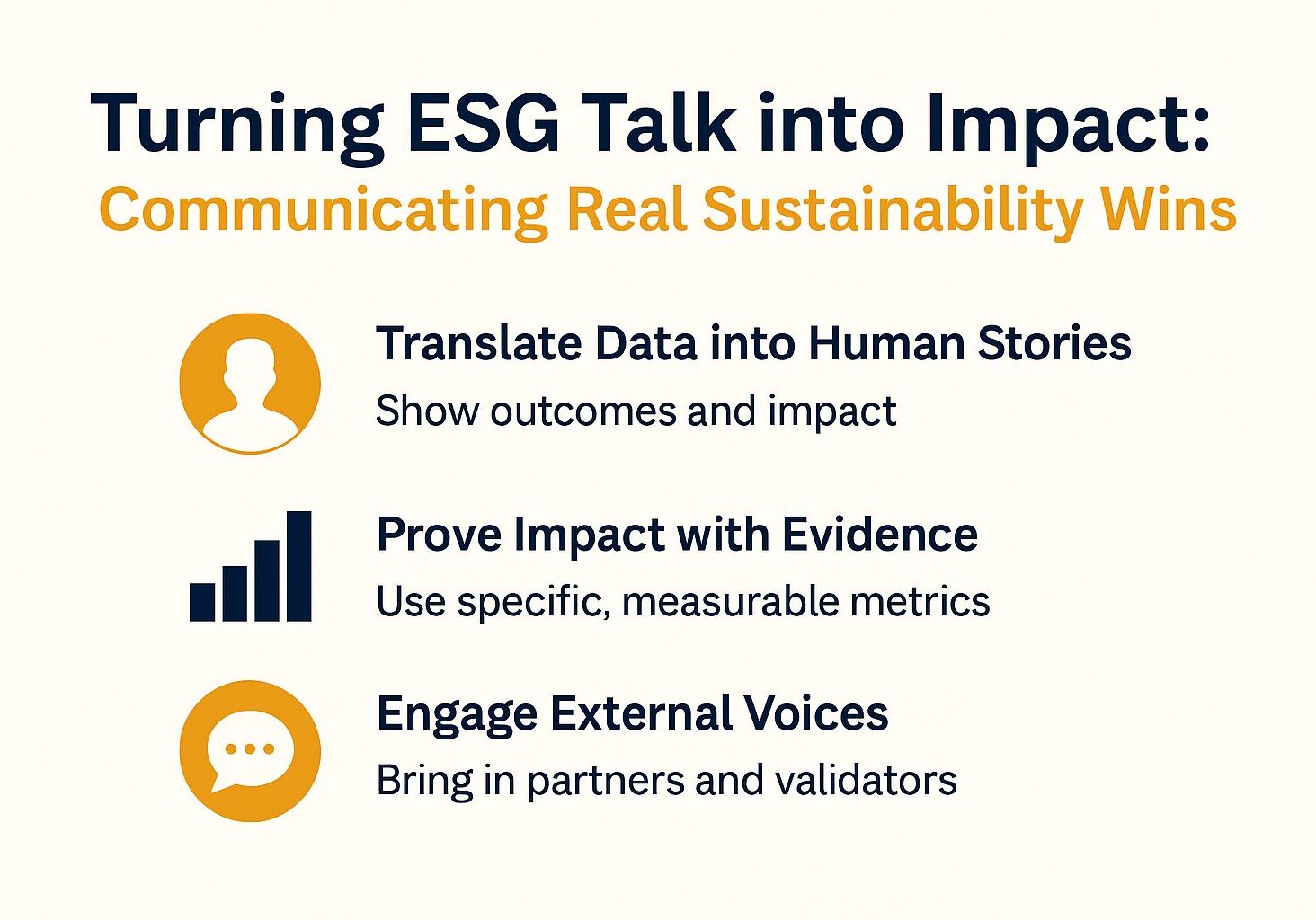
- Translate data into human stories: Show how sustainability outcomes improve lives, communities, or ecosystems.
Example: “We restored enough watershed area to supply 10,000 farms for a full growing season.” - Align sustainability goals with core business purpose: Investors, employees, and customers all want to know: Why does this matter to your mission?
- Close the loop: Every commitment should have a visible progress trail — updates, metrics, and milestones shared openly through blogs, social, and media briefings.
For narrative strategy and impact-driven messaging, see 1903 PR’s Sustainability Communications Services.
Proving Impact in a Skeptical Market
Stakeholders now question everything — and rightfully so.
Greenwashing fatigue has made audiences wary of claims that sound too polished or vague.
To cut through:
- Use third-party validation. Reference independent audits, certifications, or NGO partnerships.
- Highlight measurable progress. Use specific, time-bound metrics.
- Bring in external voices. Featuring experts, partners, and community members adds credibility.
Brands like Patagonia, Netafim, and Unilever have built trust by letting proof do the talking.
ESG Comms Strategy for 2025 and Beyond
- Make sustainability a standing agenda: Integrate ESG milestones into quarterly communications, not annual summaries.
- Activate executives as storytellers: CEO and leadership voices drive trust when they share authentic, data-backed insights.
- Create multi-channel storytelling frameworks: Repurpose impact updates into media pitches, infographics, and social threads. One strong story can live across PR, marketing, and investor materials.
Sustainability Is a Story You Prove
Audiences don’t expect perfection — they expect progress.
Every sustainability story is an opportunity to show leadership, build trust, and inspire accountability.